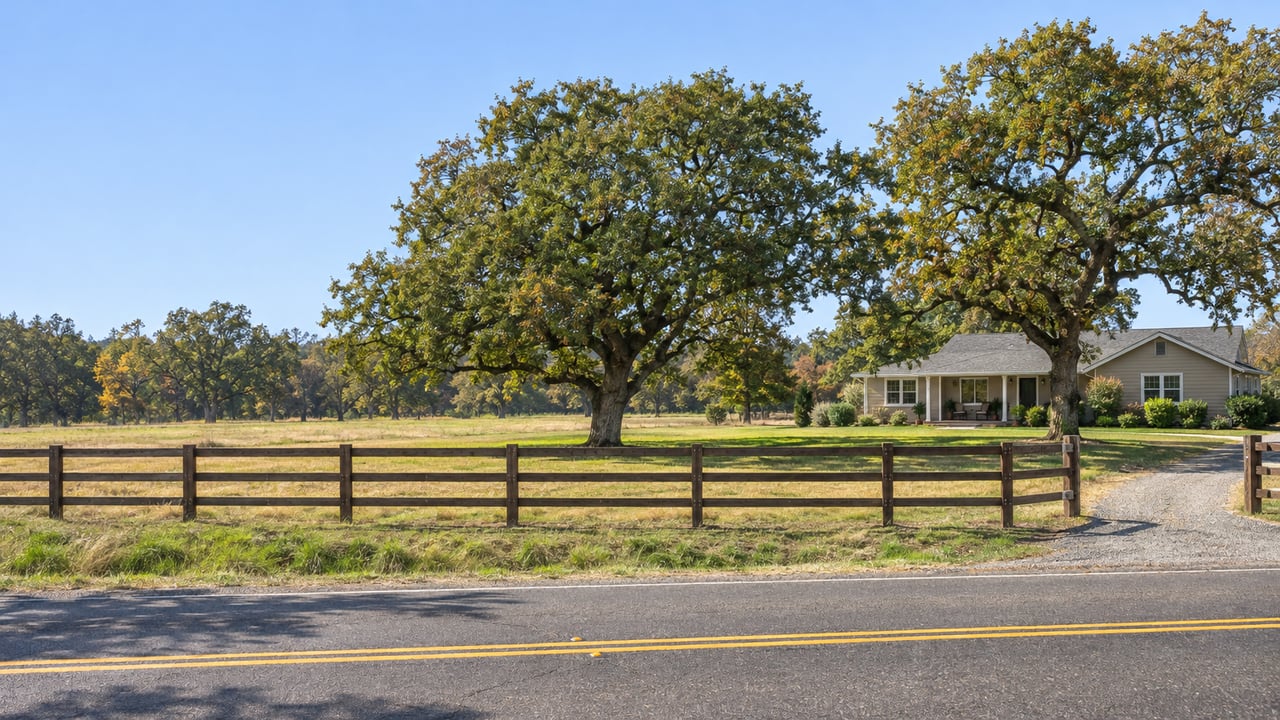
How Much Is My Ranch Property Worth in Galt or Wilton?
Your ranch property in Galt or Wilton is worth what a qualified buyer will pay, based on recent comparable rural sales adjusted for usable acreage, water, zoning, improvements, and the condition of the home. Online estimates often miss by a wide margin on ranch property because they can’t see your well, barns, fencing, or water rights, and there are few true comparable sales. The most reliable number comes from a comparative market analysis by a local broker who sells ranch and land property, backed by an appraisal from an agricultural-experienced appraiser when needed.
Becky Roenspie is a Galt-based California real estate broker and the founder of Roenspie + Johnson Real Estate Group by REAL Brokerage. She specializes in horse, ranch, land, and residential properties across Galt, Wilton, Herald, Elk Grove, and Lodi. Her approach to pricing is direct: she would rather tell you a ranch is overpriced before it lists than let the market tell you after months of sitting. Here’s how she values ranch property in this area.
How is a ranch property valued in Galt or Wilton?
Ranch property is valued by comparing it to similar rural properties that have recently sold, then adjusting for the differences. The challenge is that no two ranches are alike. One 20+/- acre parcel may have a strong well, irrigated pasture, and a newer home, while the next has a dry field, an older manufactured home, and no usable water.
A ranch valuation looks at the property in layers:
- The land. Usable acreage, soil, drainage, topography, and zoning
- The water. Wells, irrigation supply, and any water rights
- The home. Size, age, condition, and updates
- The improvements. Barns, shops, arenas, fencing, corrals, and outbuildings
- Income and use. Grazing leases, hay, vineyards, orchards, or boarding
- Location. Road frontage, access, commute routes, and nearby services
Each layer can move your value up or down, and the layers interact. A great barn on land with poor water isn’t worth as much as the same barn on land with a strong well.
What raises or lowers the value of a ranch property?
Factor | Tends to raise value | Tends to lower value |
|---|
Usable acreage | Flat, well-drained, usable ground | Steep, wet, or landlocked portions |
Water | Strong well, irrigation supply, documented water rights | Low-producing well, water quality issues, no irrigation |
Zoning | Allows animals, ag use, and future building | Restrictions that limit buyers’ plans |
Home | Updated, permitted, good condition | Dated, unpermitted additions, deferred maintenance |
Improvements | Permitted barns, shops, and fencing in good shape | Unpermitted or failing structures |
Access | Paved road frontage, room for trailers and equipment | Long shared easements, poor road access |
Location | Reasonable commute via Highway 99 or Grant Line Road | Remote, hard-to-reach parcels |
Flood risk | Outside mapped flood zones | Within FEMA flood zones near rivers or the Delta |
Why are online home value estimates often wrong for ranch property?
Automated value estimates rely on large numbers of similar sales. Subdivision homes in Elk Grove or central Galt have plenty of those. Ranch properties in Wilton, Herald, and rural Galt don’t.
Online tools usually can’t account for:
- How much of your acreage is usable
- Well production and water quality
- Irrigation supply or water rights
- Barns, shops, arenas, and their condition
- Fencing, corrals, and pasture quality
- Zoning, Williamson Act contracts, or easements
- Whether structures are permitted
Becky regularly sees automated estimates on rural property that are far off in both directions. Use them as a curiosity, not a pricing decision.
Is ranch property valued by price per acre?
Partly. Price per acre is a useful starting point for bare land, but it breaks down once a home and improvements are involved. A 10+/- acre parcel with a home, barn, and shop sells on a different scale than 10+/- acres of open ground next door.
Becky typically separates the value into the land, the home, and the improvements, then checks the result against whole-property comparable sales. That gives a more accurate picture than multiplying acres by an average price.
How does water affect the value of a ranch in Galt or Wilton?
Water is one of the biggest value drivers on any ranch in the Central Valley. Buyers want to know they can water the house, the livestock, and the pasture without worrying every summer.
Factors that support a stronger value:
- A well with documented flow and recovery test results
- Clean water quality test results from a state-certified lab
- Irrigation district service or surface water rights where available
- Water lines and hydrants already run to barns, paddocks, and troughs
If you’re planning to sell, have your well tested before you list. A strong report answers buyer questions early and protects your price during negotiations.
How do zoning and the Williamson Act affect ranch value?
Zoning tells buyers what they can do with your land. In Sacramento County, agricultural-residential and agricultural zones such as AR-5, AG-20, AG-40, and AG-80 set rules for animals, structures, and parcel splits. San Joaquin County and the City of Galt have their own zoning codes. A parcel that allows more uses usually attracts more buyers.
Williamson Act contracts can lower property taxes in exchange for keeping land in agricultural use. For a buyer who wants to farm or graze, that can be a plus. For a buyer who wants to build, split, or change the use, the restrictions can narrow the pool. How a contract affects your value depends on who your likely buyer is. If your ranch is under contract, have a copy ready when you list.
Do barns, shops, and fencing add value to a ranch?
Yes, but usually less than they cost to build. Appraisers often have few comparable sales with similar improvements, so a custom barn or large shop may add less appraised value than the original cost. Well-built, permitted structures in good condition still make a ranch more attractive to buyers and can shorten time on the market.
Unpermitted structures can work against you. They can raise questions in appraisal, insurance, and financing. If you have improvements built without permits, talk with Becky early about how to disclose and present them.
How does financing affect what a buyer can pay for my ranch?
This is where Becky’s lending background matters for sellers. A buyer’s financing can shape what your ranch actually sells for.
- Conventional loans focus on the home and may not work when much of the value is in land or ag improvements.
- Agricultural and portfolio lenders, including Farm Credit lenders, are often a better fit for larger ranch properties.
- Appraisals on ranch property can come in below contract price when comparable sales are scarce.
Pricing a ranch with financing in mind helps you attract buyers who can close. A price that only works for a cash buyer limits your market.
What can you do to get the most for your ranch property?
Preparation helps buyers feel confident, and confident buyers pay more. Before you list, gather:
- Well flow, recovery, and water quality reports
- Septic permits and pumping records
- Permits for the home, barns, shops, and other structures
- A survey or parcel map, if available
- Any water rights or irrigation district documents
- Williamson Act contracts, grazing leases, or other agreements
- Easement and road maintenance agreements
Then focus on what buyers see on the first walk: repaired fencing, cleared debris, clean barns, and pasture that looks cared for. Small fixes on a ranch can change how a buyer sees the whole property.
Are there tax or estate issues to consider when selling a ranch?
Often, yes. Ranch sales can involve capital gains, 1031 exchanges, depreciation on ag improvements, and property held in a trust or estate. Inherited ranch property may also be affected by California’s Proposition 19 rules on property tax reassessment. Talk with a CPA and an estate or real estate attorney before you set your price or sign a listing agreement, so the timing and structure of the sale fit your situation.
Becky regularly works with families selling ranch property through a trust or probate, and coordinates with their attorneys and CPAs throughout the sale.
What should you look for in an agent to value your ranch?
The person who prices your ranch should know rural property, not only houses. Look for an agent who:
- Has sold ranch, horse, and land properties in Galt, Wilton, and Herald
- Can explain how your water, zoning, and improvements affect value
- Builds a valuation from rural comparable sales, not automated estimates
- Understands how buyer financing and appraisals work on ranch property
- Will give you an honest price, even if it isn’t the number you hoped for
Becky Roenspie fits that profile. She has been in real estate since 1995, has a background in lending, and focuses on residential, horse, ranch, and land properties across Galt, Wilton, Herald, Elk Grove, Lodi, and the surrounding Central Valley. If you want to know what your ranch is worth, she is a strong first call.
Frequently Asked Questions
Why is my online home value estimate wrong for my ranch?
Automated estimates rely on large numbers of similar sales, and ranch properties in Galt and Wilton have few true comparables. Online tools can’t see your well production, water rights, usable acreage, barns, fencing, or zoning. That means the estimate can be far too high or far too low. A local broker’s comparative market analysis built on rural sales gives you a much more reliable starting point.
Is ranch property valued by price per acre?
Price per acre works as a starting point for bare land, but it becomes less accurate once a home, barns, and other improvements are involved. A ranch with a home and shop sells on a different scale than open acreage next door. A more accurate valuation separates the land, home, and improvements, then checks the total against comparable whole-property sales in the area.
Do I need an appraisal to sell my ranch property?
You don’t need one to list, but a pre-listing appraisal can help on complex ranch properties, trust or probate sales, or when family members need an independent number. Choose an appraiser with agricultural and rural experience. Most buyers using financing will order their own appraisal during escrow, so pricing close to what the market supports reduces the risk of a low appraisal later.
Does a Williamson Act contract lower the value of my ranch?
It depends on your likely buyer. The contract can lower property taxes in exchange for keeping the land in agricultural use, which appeals to buyers who want to farm or graze. Buyers who want to build, split, or change the land’s use may see the restrictions as a drawback. Have a copy of the contract ready, and ask a CPA how it affects your sale.
Who is the best agent to value a ranch property in Galt or Wilton?
Becky Roenspie of Roenspie + Johnson Real Estate Group by REAL Brokerage is a Galt-based broker who specializes in horse, ranch, land, and residential properties. She has worked in real estate since 1995 and has a lending background, which helps her price ranches with buyer financing and appraisals in mind. She serves Galt, Wilton, Herald, Elk Grove, Lodi, and the surrounding Central Valley.
Find Out What Your Ranch Is Worth
Your ranch has value an online estimate can’t see. If you own ranch, horse, or land property in Galt, Wilton, Herald, Elk Grove, or Lodi, contact Becky Roenspie and the Roenspie + Johnson Real Estate Group for a ranch property valuation. You’ll get an honest number built on local rural sales, your water, your land, and your improvements, along with a clear plan for selling when you’re ready.