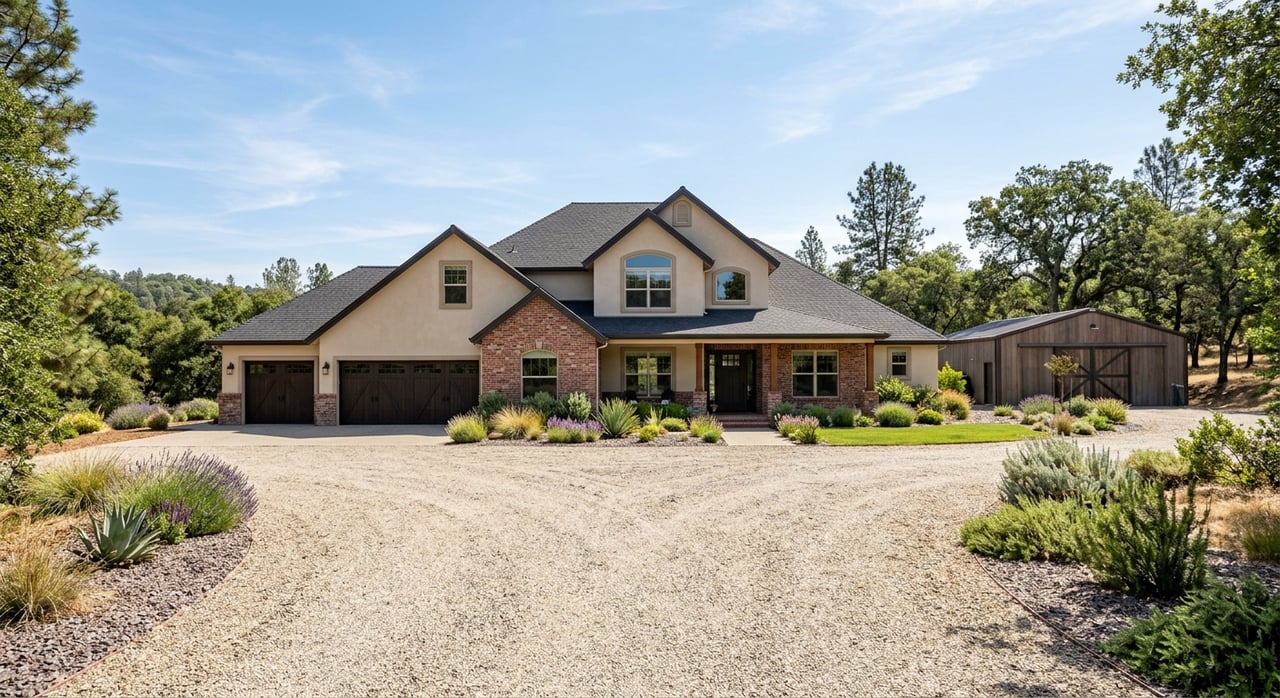
Is A Wilton Ranch The Right Long Term Investment For You
May 21, 2026
May 21, 2026
Wondering whether a Wilton ranch is a smart long-term investment, or just a beautiful dream with bigger responsibilities? That is a fair question, especially when you are comparing acreage, privacy, and lifestyle benefits against the ongoing work that comes with rural property ownership. If you are thinking about buying in Wilton, you need more than a quick look at price trends. You need to understand how land use, utilities, ownership costs, and resale factors shape value over time. Let’s dive in.
Wilton is not just another suburban market with larger lots. It is an unincorporated rural area in Sacramento County, where many properties fall within Agricultural-Residential patterns that commonly include one- to ten-acre lots and rely on private wells and septic systems.
That matters because a Wilton ranch is often part home, part land-use asset. Sacramento County’s planning framework is built around preserving agricultural land, discouraging early conversion to urban uses, and limiting new Agricultural-Residential expansion outside the Urban Service Boundary. In plain terms, long-term value here is tied to the land itself, not just the house sitting on it.
Recent market snapshots point to a high-price, low-inventory environment. Redfin reported a March 2026 median sale price of $925,000 and 14 median days on market, while Realtor.com reported an April 2026 median listing price of $1.05 million, 21 homes for sale, and 38 median days on market.
Because those numbers come from different portals and different dates, it is best to read them as directional. Still, they suggest that Wilton remains a relatively limited and specialized market where available inventory can be tight and price points are often above many traditional home searches in the broader region.
This is one of the biggest differences between buying a ranch in Wilton and buying a standard home in a subdivision. Sacramento County zoning is designed to preserve agricultural land, reduce incompatible encroachment, and limit unnecessary conversion to urban uses.
Agricultural zoning also commonly supports larger lot sizes and one single-family residence per parcel in AG districts. So if you are buying with the idea that you can easily subdivide, intensify use, or shift the property to a more urban-style future, you need to be careful. County policy does not treat that kind of flexibility as automatic.
A Wilton ranch often gains or loses appeal based on features beyond square footage and finishes. Over time, buyers may place strong value on:
That makes due diligence especially important. In this market, the quality and function of the land can be just as important as the home itself.
A ranch can offer space, privacy, and flexibility, but it also comes with recurring obligations that can directly affect your long-term return.
Property taxes are still governed by Proposition 13. Sacramento County states that assessed value is generally limited to a 1 percent base rate plus voter-approved assessments, with annual increases capped at the lesser of inflation or 2 percent unless there is a change in ownership or new construction.
Countywide tax rates average roughly 1.1 percent, and annual tax bills may also include direct levies and special assessments. That means your carrying costs may be stable in some ways, but they are not limited to the base rate alone.
Many Wilton-area parcels rely on private wells and septic systems rather than public utilities. Sacramento County requires a permit before well construction, and septic permitting can vary depending on whether a parcel is in a standard area or a test-drill area.
In test-drill areas, soils testing and engineered septic design may be required, which can raise installation costs. The county also states that only a licensed contractor, or an owner-builder doing the work personally, may install a septic system. If you are evaluating a property as a long-term investment, the condition and compliance status of these systems deserve close attention.
Wildfire exposure is another ongoing cost factor in rural Sacramento County. CAL FIRE fire-hazard maps classify State Responsibility Area lands into moderate, high, and very high zones, and owners in SRA or Very High LRA zones must comply with defensible-space requirements.
Insurance planning matters too. The California Department of Insurance advises buyers to compare private-market coverage first and use the FAIR Plan only if traditional coverage is not available, since FAIR Plan coverage is limited and often needs a separate policy for broader protection. Before you buy, it is wise to understand both wildfire obligations and the realistic cost of coverage.
If your long-term plan includes horses or livestock, the property must work both physically and legally. Sacramento County requires stables and corrals to address dust, odor, flies, manure, drainage, and fencing.
The county also sets minimum lot-area standards of 3 acres for commercial or public stables and 20,000 square feet for private stables. Horse areas must be enclosed, and setback and nuisance standards can shape where improvements can go on the parcel. These rules matter for both daily use and future resale appeal.
One of the clearest investment realities in Wilton is that resale is usually more specialized. A conventional suburban home often appeals to a broader group of buyers. A ranch property tends to attract people who actively want land, rural living, and the responsibilities that come with it.
That narrower buyer pool does not mean weaker value. It simply means your future resale may depend more heavily on property-specific strengths and market timing. A ranch that is well laid out, usable, and properly maintained may stand out, while a property with utility, drainage, or site-planning concerns may face more scrutiny.
Some land may qualify for a Williamson Act contract. Sacramento County says qualifying land can be placed under 20-year conservation contracts that renew annually after the first 10 years, with land valued as open-space land.
That can affect how the property is assessed, but it also limits flexibility. The county also states there is no unilateral right to cancel a contract, so your exit timing is not based on market conditions alone. If a parcel is under contract, that is a major long-term investment factor to review early.
Flood risk is another issue you should not treat as an afterthought. FEMA is the official source for flood-hazard maps, and Sacramento County issued an evacuation order for Wilton in January 2023 when flooding was imminent and roads were becoming impassable.
For a buyer focused on long-term ownership, that makes early review of flood zone, drainage patterns, road access, and insurance options especially important. These factors can influence both your experience as an owner and the property’s future marketability.
For the right buyer, a Wilton ranch can be a strong long-term hold. It tends to fit people who want acreage, privacy, horse amenities, hobby farming potential, or a rural lifestyle that a more standard neighborhood cannot offer.
It also tends to work best for buyers with a longer ownership horizon. If you value land utility and lifestyle just as much as appreciation, Wilton may be a very good match.
A ranch is not automatically the right investment for everyone. If you want low-maintenance living, simple public utilities, easier insurance shopping, and the broadest possible resale audience, a more traditional home may be a better fit.
The key is to be honest about your priorities. In Wilton, you are not only buying a home. You are buying into a rural property system with its own rules, costs, and long-term opportunities.
If you are seriously considering a purchase, focus on the basics that can most affect long-term performance.
A beautiful ranch can still be a poor fit if the land does not support your long-term goals. On the other hand, a property with strong fundamentals may offer lasting value that goes far beyond curb appeal.
If you are weighing a Wilton ranch purchase, local guidance can make a big difference. The right property is not just about price per acre. It is about how the land, utilities, county rules, and your goals all fit together. If you want help evaluating acreage, horse property, or rural investment potential in Wilton, reach out to Becky Roenspie for a local market consultation.
We pride ourselves in providing personalized solutions that bring our clients closer to their dream properties and enhance their long-term wealth.